
Thelander PC Digest: February 2026
Pay Premiums in 3 Charts
In this month’s Thelander Digest, we are revisiting AI Pay Premiums. As the race to develop, adopt and capitalize on the transformative effects of LLMs and related AI technologies continues, not only are AI companies themselves raising huge funding rounds, but the broader landscape for recruiting and retaining technical talent is shifting as well.
Thelander data shows that while software engineers remain the technical roles most likely to receive a premium, data scientists are quickly catching up. Not only that, but it also shows that there is a growing differentiation in the rates at which different levels of software engineers receive a premium.
Who is getting the premium?
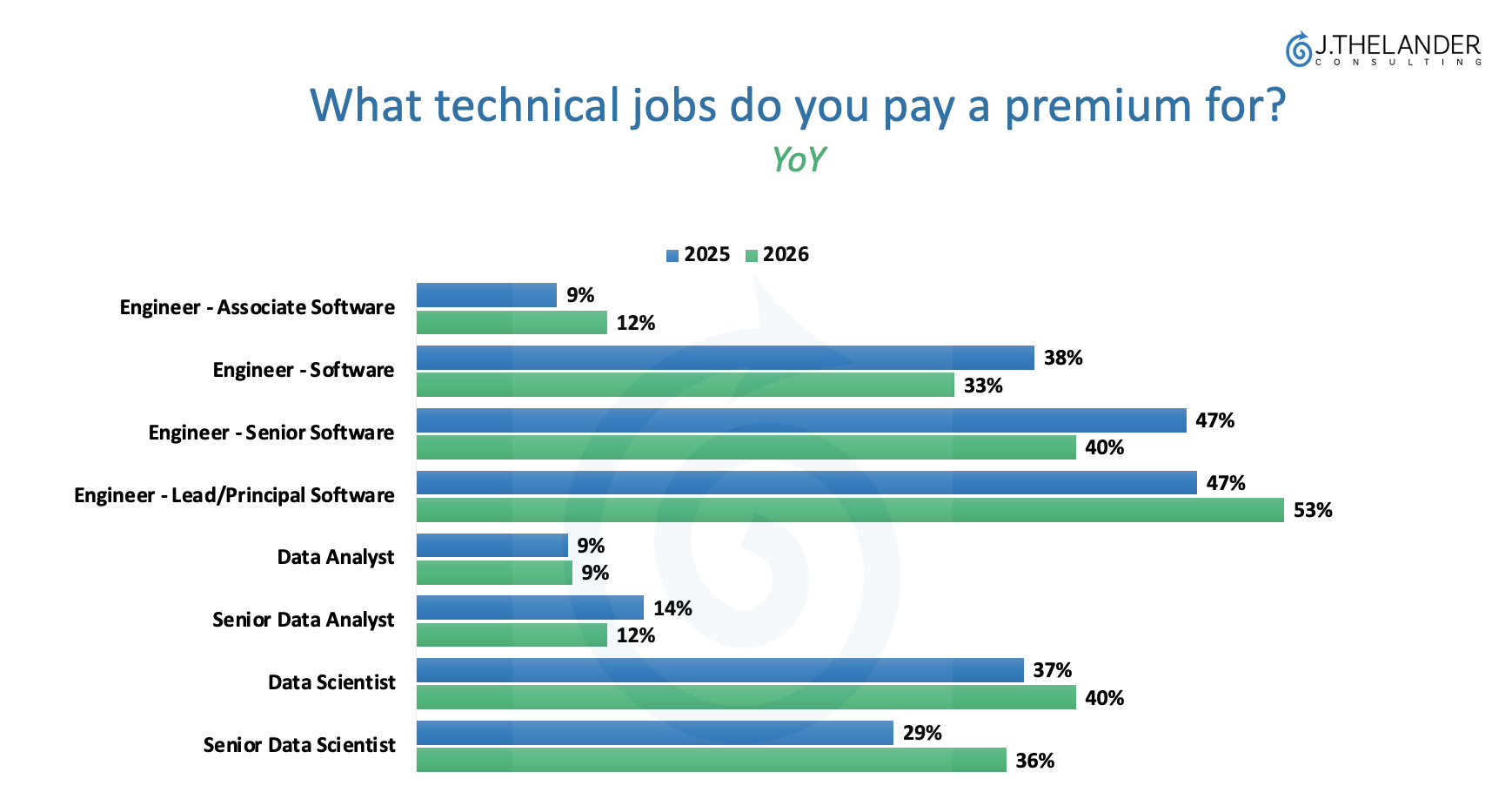
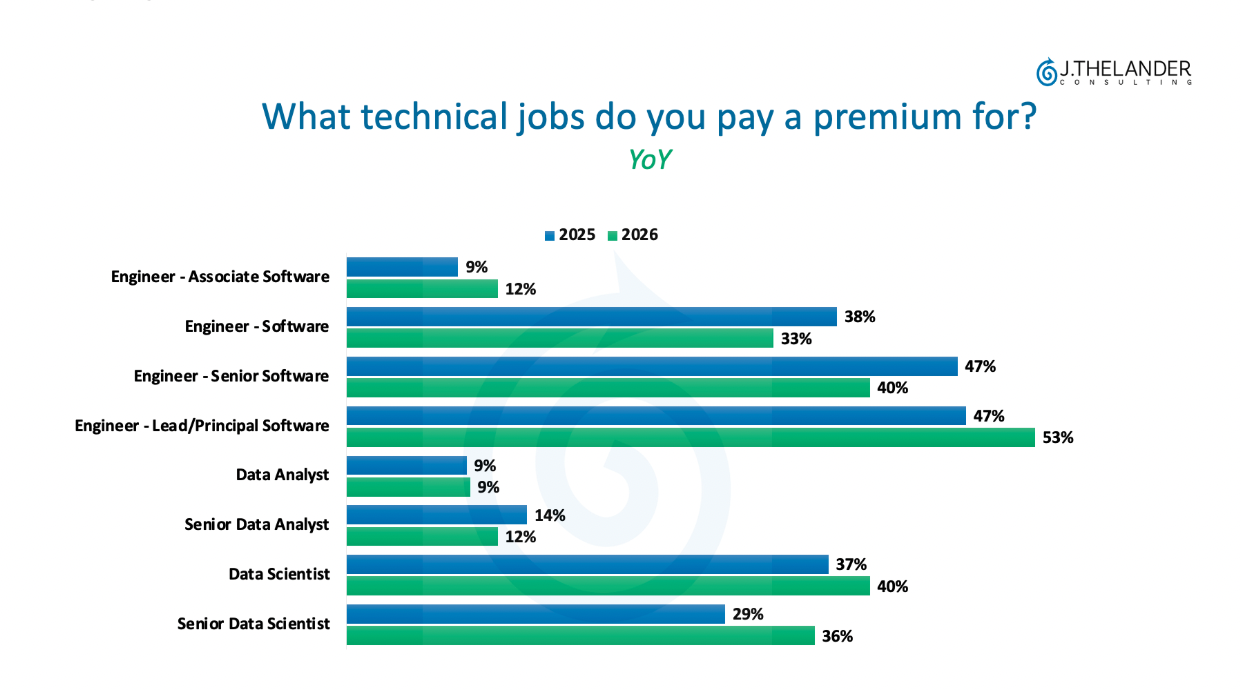
Thelander’s latest data shows that AI/ML pay premiums are increasingly concentrated in a few key technical roles – especially lead software engineers and data scientists.

Lead/Principal Software Engineers are the most common role to receive a pay premium for their technical skills, and have increased by 6% from 2025 to 2026.
Associate Software Engineers have also seen a 3% increase YoY, hinting at a growing demand for junior talent entering the rapidly evolving job market with the most recent technical training.
Data Scientists and Senior Data Scientists are more likely to receive a pay premium in 2026 compared to 2025 – growing by 3% and 7% respectively.
Software Engineers and Senior Software Engineers both saw a decrease between this year and last year.
Together, these trends suggest premiums are shifting away from mid-level engineers and towards lead engineers and data scientists, with a small but notable uptick for entry level software engineers. As AI automates numerous basic programming tasks, it is those with the knowledge and experience to occupy high-level roles and those with specific skill sets who are in high enough demand to receive a premium.
How big is the premium?
Now let’s look at how much of a premium Data Analysts/Scientists and Software Engineers receive when they have Machine Learning skills:
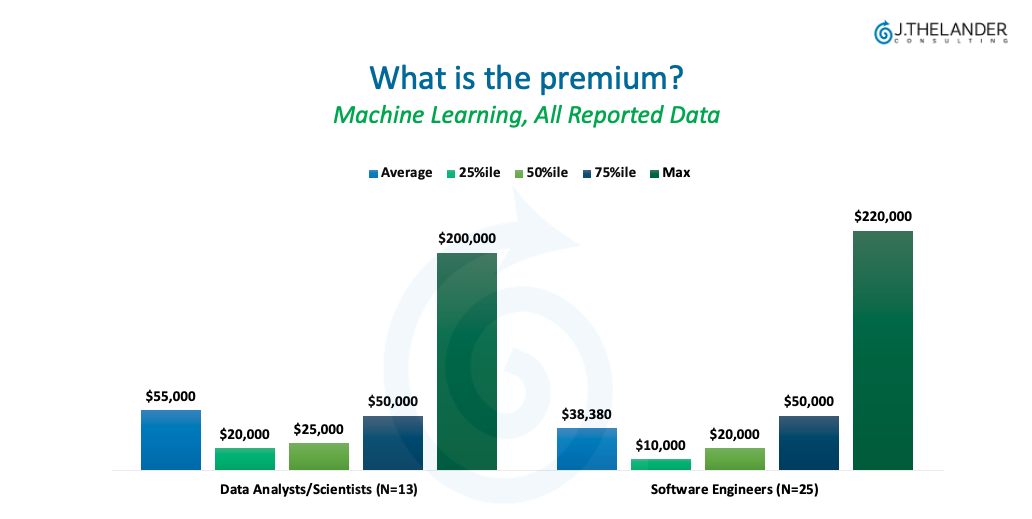
For Data Analysts / Scientists, the pay premiums range from $20,000 (25th %ile) to $200,000 (max) with an average hovering at $55,000. This has been relatively consistent YoY since last year.
For Software Engineers – the premiums have a broader range, going from $10,000 (25th %ile) to $220,000 (max) with an average at $38,380. This represents an increase compared to last year, especially at the higher end of the spectrum, as you can see below.
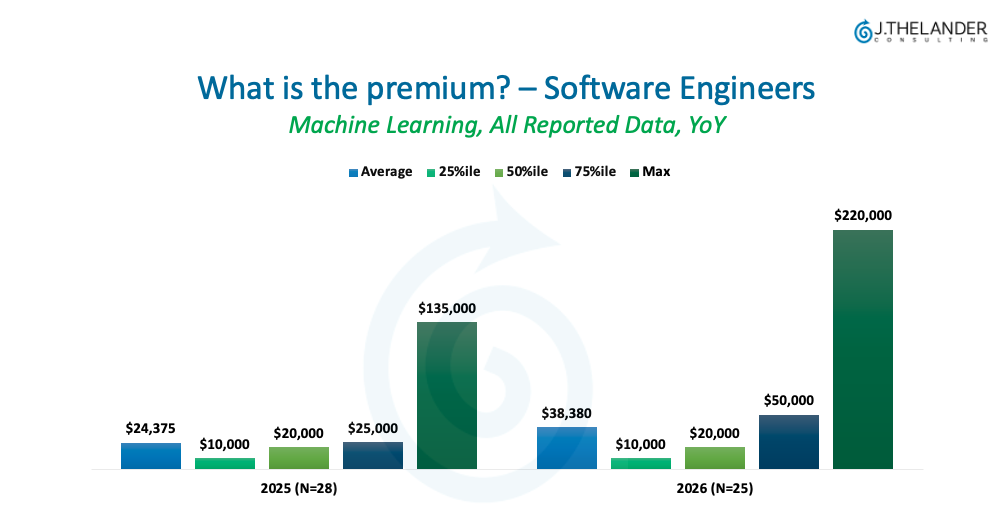
With this increase, software engineers with ML skills have effectively caught up with data scientists with the same skill set in terms of the premiums they receive.
This suggests that employers are increasingly willing to pay extra for AI skills regardless of the background and more general job function of the person who has them.
What’s The Bottom Line?
As AI changes the broader economic landscape, it also affects compensation and the willingness of companies to pay premiums for specific technical roles and skill sets. Companies who want to hire and retain data scientists, high level software engineers, or people with AI-related skills in general increasingly have to pay a premium, although they may no longer be as likely to have a pay premium for lower level roles or other skill sets as the effects of AI set in the broader job market.
Participate in the no-cost Thelander Private Company Compensation Survey to see how your company’s current compensation compares to market. You’ll receive access to real-time data for every job title you fill out – for no charge!
Tags: Newsletter, Private Company